Fares and tolls fund the transportation system New Yorkers rely on, but when some avoid paying, it undermines service quality for everyone else. The New York State Legislature is reviewing an important bill to strengthen enforcement against toll evasion. This brief looks at how this legislation advances MTA’s goals of financial stability across the transportation system.
Most people pay the toll on MTA’s bridges and tunnels, but a small number of drivers intentionally do not pay
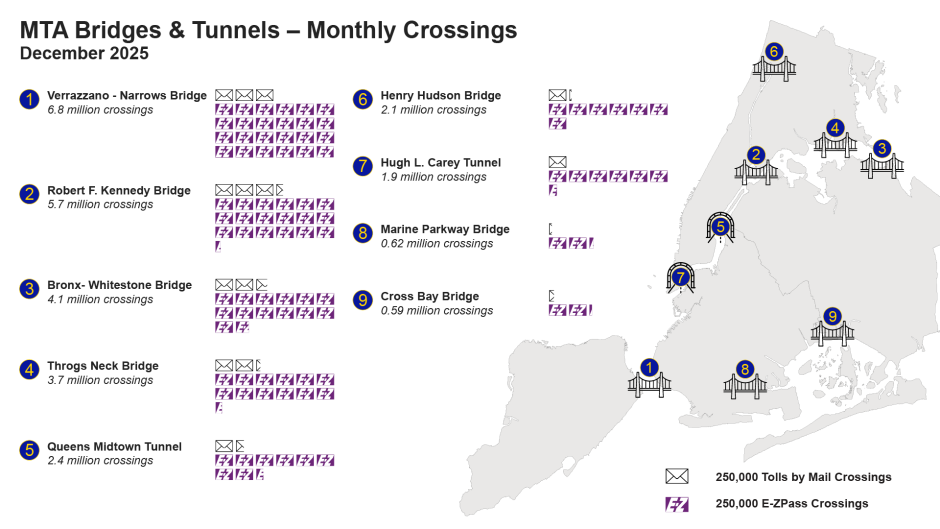
In 2025, the MTA’s bridges and tunnels carried 340 million vehicles, and tolls generated $2.5 billion the year before. While most drivers pay, some deliberately evade tolls, creating revenue losses that impact the entire transit system. Because this funding supports subway, bus, rail, and bridge and tunnel improvements, collecting unpaid tolls is a real priority.
Toll evasion takes two forms: drivers who purposely alter their car’s license plate to evade the toll, and drivers who receive their bills and refuse to pay them
A relatively small number of customers have unpaid crossings because they are unaware they have an outstanding toll bill or because they simply cannot afford to pay. MTA works closely with these customers to resolve their issues. Instead, many unpaid tolls come from intentional and consistent toll evaders who repeatedly refuse to pay. We see two major patterns:
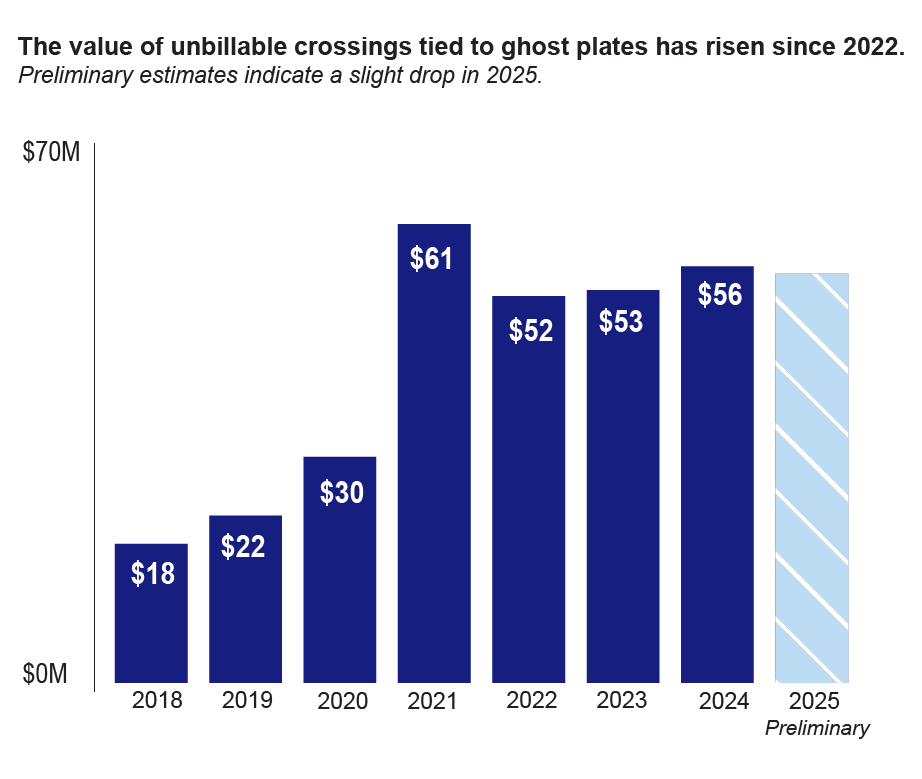
- Ghost plates: These drivers intentionally obscure or use fake license plates so they can’t be processed by the toll system. Ghost plates have cost the MTA $42 million on average in lost toll revenue annually over the past 7 years.
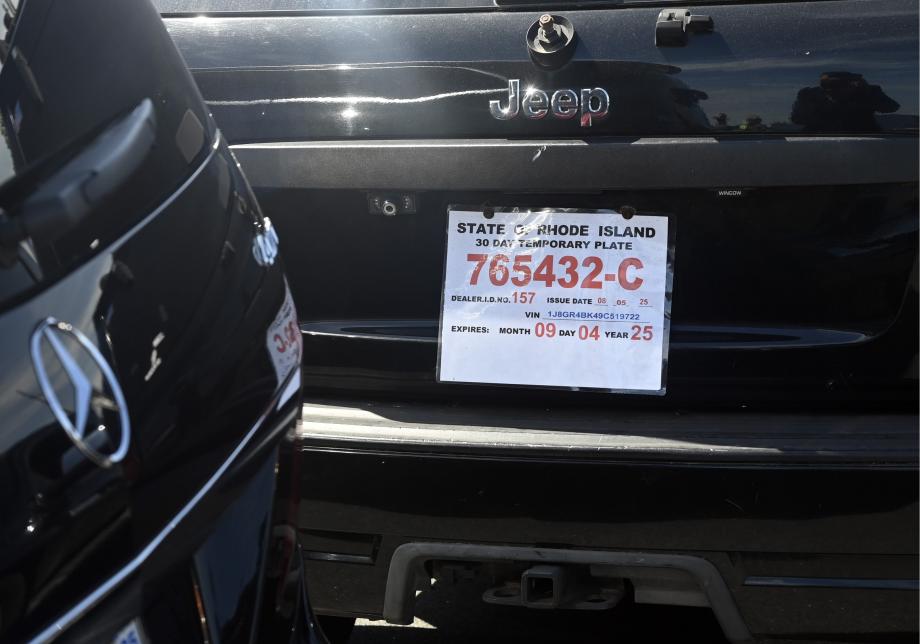
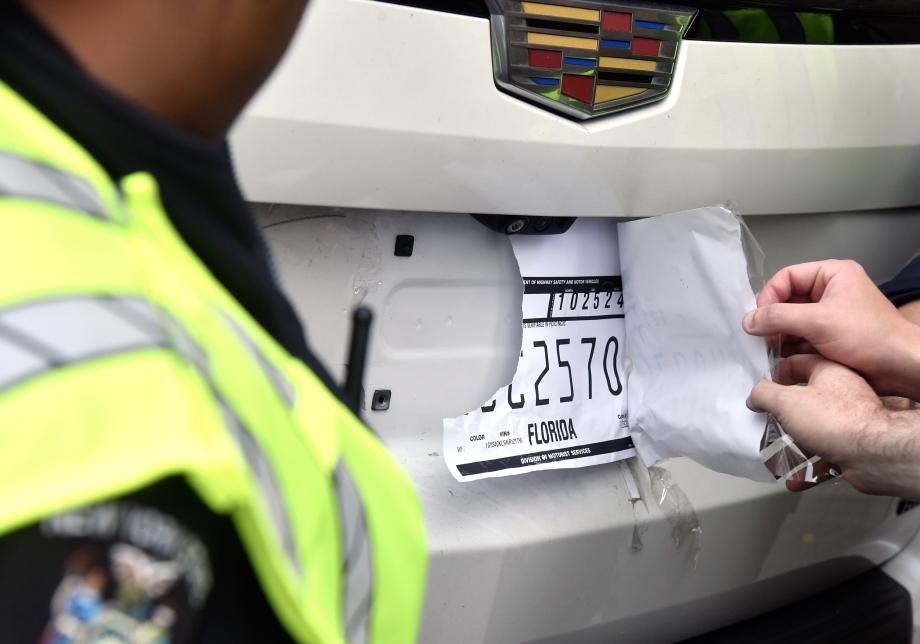
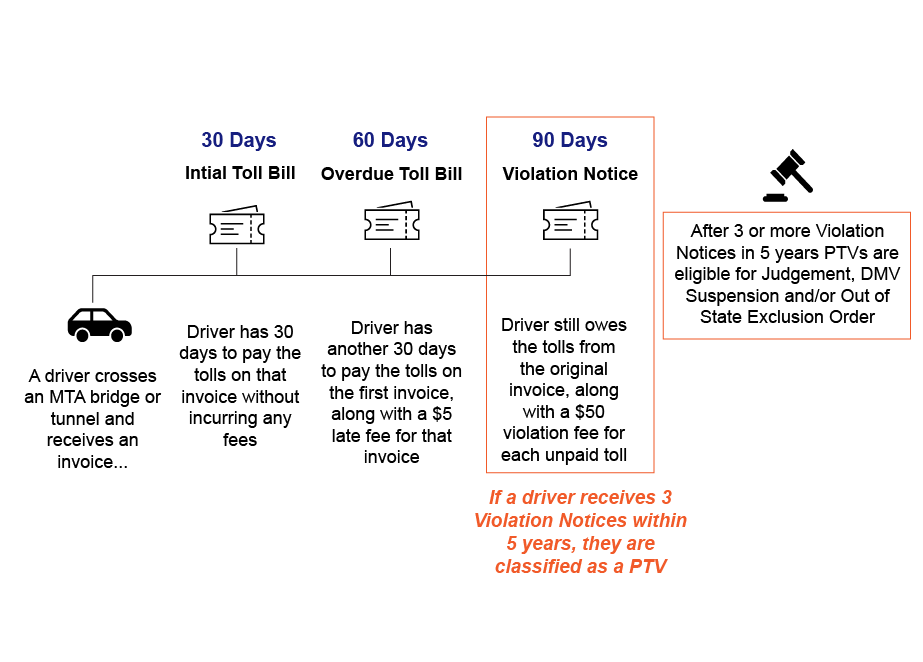
- Persistent Toll Violators (PTVs): When these drivers receive their toll bills, they intentionally and repeatedly ignore invoices and violation notices. Becoming a PTV isn’t easy – it takes repeated action, disregard for the law, and three separate violation notices in a five-year period. The timeline looks like this:
In 2023, the MTA launched aggressive toll enforcement efforts and in 2024 the NYS Legislature adopted two of five Blue-Ribbon Panel recommendations on fare and toll evasion
In 2022, the MTA convened a Blue-Ribbon Panel to better understand fare and toll evasion and develop new solutions to the challenge. After comprehensive study, the final report proposed five key legislative recommendations to combat toll evasion.
In 2024, the New York State Legislature adopted two of the measures recommended by the Blue-Ribbon Panel: increase financial penalties for covered or obscured license plates and engage directly with e-commerce retailers to crack down on the sale of products that block license plates. Both are important steps forward.
At the same time, the MTA didn’t wait for legislation to act. In 2023, we increased enforcement at all crossings and in March 2024, we launched a multi-agency task force to remove drivers with ghost plates from New York City roadways, achieving real results.
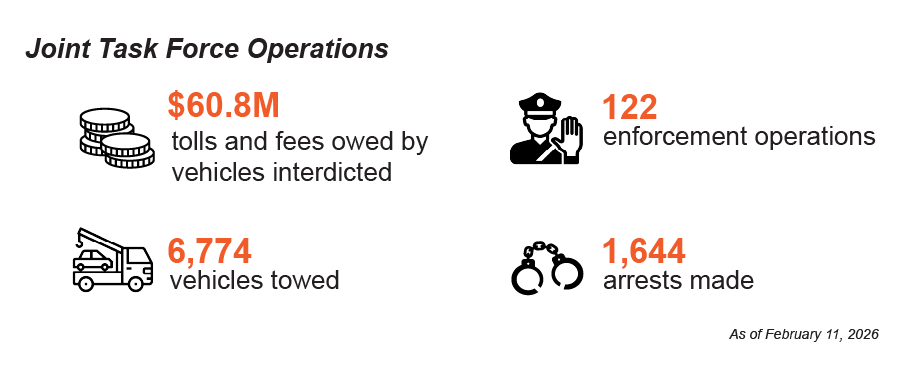
We’ve made important progress, but the problem persists
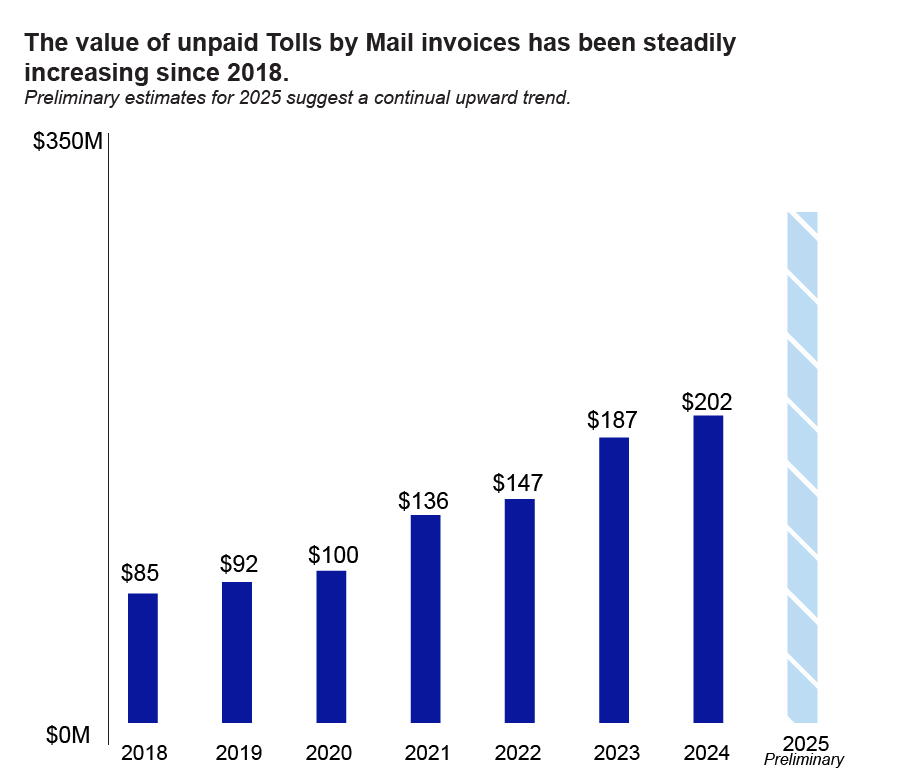
Action by the NYS State Legislature in 2024 and the expansion of the interagency task force on ghost plates are meant to work in tandem. But due to only two of the five recommendations being adopted, these interventions have slowed the growth of toll evasion, but not reversed it.
The value of unbillable crossings tied to ghost plates rose from 2022 to 2024, and preliminary estimates for 2025 indicate a slight dip, but not a significant decline since new interventions were adopted.
Tolls by Mail invoices – which includes the revenue lost when PTV drivers evade payment – have grown by 138% from 2018 to 2024, with over $202M owed by drivers in 2024. Preliminary data for 2025 indicate that upward trend has continued, and interventions adopted in 2024 have not gone far enough to mitigate impacts of PTVs.
To effectively reduce intentional toll evasion, enforcement and prevention strategies must go further to address driver behavior
A bill currently in the NYS Legislature would deliver the tools necessary to implement the remaining recommendations put forth by the Blue Ribbon Panel. The bill, S.7905 in the Senate and A.8860 in the Assembly, will enable the MTA to more forcefully address those using ghost plates, empower the MTA to further pursue PTVs, and more effectively collect unpaid tolls from repeat offenders.
The sections of the bill targeting ghost plates would deliver stronger penalties and enhance enforcement
There are two components of the proposed legislation that tackle ghost plates:
- Implement a financial deterrent to repeatedly covering license plates. After three convictions for obscuring a license plate within five years, the violation would be added as points to the driver’s operating record.
- Allow law enforcement to remove and confiscate plate covers. Police could seize illegal plate coverings on the spot when they see them.
The other sections of the bill would enable MTA to collect tolls from drivers who repeatedly and intentionally do not pay
The legislation has four mechanisms to reduce lost revenue from PTVs:
- Create more ways to collect unpaid tolls. Allow different types of liens, like property or bank account liens, to satisfy payments owed.
- Broaden enforcement authority. Let MTA B&T and MTA Police Department officers enforce judgements, not just the NYC Sheriff.
- Take toll violations more seriously under the law. Classify toll violations as a ‘theft of service’, a Class A misdemeanor.
- Close re-registration loopholes. In some cases, drivers who have had their registration suspended for non-payment of tolls will re-register their vehicle under a new driver, often a family member or friend, to avoid penalties and immediately return the car to the road. Under the proposed legislation, after the DMV would be able to block a Vehicle Identification Number (VIN) from re-registering under a new driver until the tolls and fees are paid.
None of these proposals target the everyday driver who accidentally misses a toll. This is about closing the gap on intentional, repeated bad behavior.
This bill will sustain our operating budget and keep New Yorkers safe on the roads. And these changes would provide an overdue benefit to honest drivers whose tolls have been covering for others who cheat the system.
The MTA Policy Brief highlights key policy developments shaping New York’s transportation system. Designed for decision-makers, journalists, advocates, and riders, we explain the most pressing transportation challenges of today and tomorrow, from budget complexities to legislative actions to infrastructure investments. Read more of the Policy Brief.