This week Governor Hochul and the New York State Legislature passed the State Budget for Fiscal Year 2027. In this Policy Brief, we explore what’s in the budget for public transit.
Every spring, the Governor and New York State Legislature develop and pass a budget, outlining the state’s priorities for the upcoming fiscal year. The Fiscal Year 2027 (FY2027) State Budget includes funding for the MTA from subsidies, dedicated taxes, and one-time appropriations to sustain daily operations and invest in capital improvements.
The MTA continues to receive State operating aid to support day-to-day service
Like most U.S. public transit agencies, the MTA doesn’t get all its revenue from fares; our budget is partly funded by public subsidies. The FY2027 State Budget provides State aid to the MTA, which covers about 40% of the MTA’s operating budget, through Statewide Mass Transportation Operating Assistance (STOA) appropriations and other dedicated State revenues:
- $4.5 billion in STOA appropriations. STOA is New York’s primary operating aid program for transit systems statewide. More than 100 transit agencies across New York State receive STOA funding. For the MTA, STOA provides stable support that buffers fluctuations in fare and toll revenue.
- $4.1 billion in other dedicated State revenues including the Payroll Mobility Tax and additional downstate taxes and fees. These fees flow directly to the MTA, so they aren’t subject to negotiation every time Albany develops a budget.
The $8.6 billion contribution toward the MTA’s operating budget largely supports salaries and benefits for more than 70,000 employees, utility costs, maintenance, and debt service, as the Policy Brief previously explained.
New funding will invest in generational capital projects
Building on last year’s historic investment in MTA state of good repair through the 2025-2029 Capital Program, this year’s budget provides new funding to start design work on two capital improvement projects: redesign of the Jamaica Station complex and the 125th Street Subway Extension project. Here’s where the money will go:
Re-envision and design a world class Jamaica Station complex
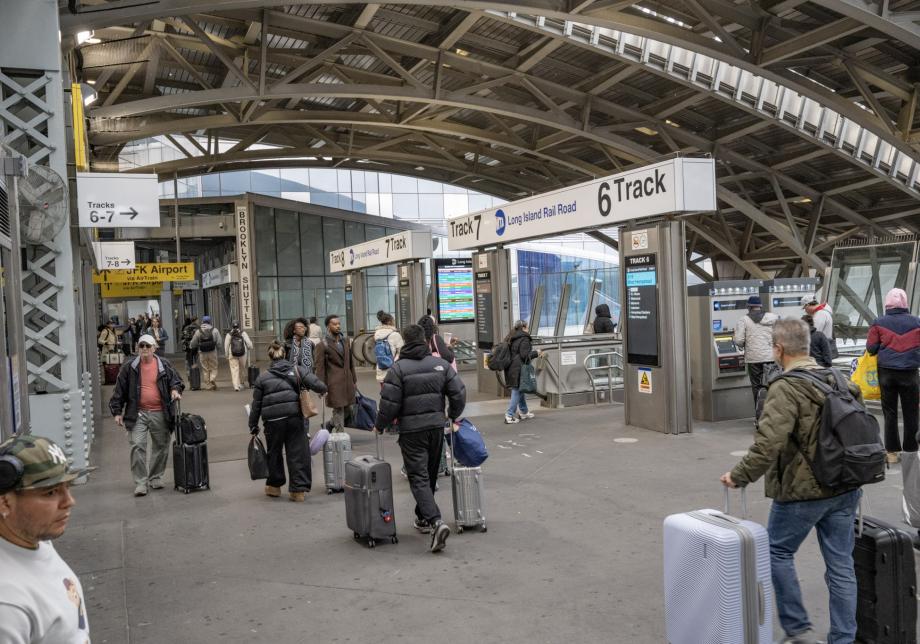
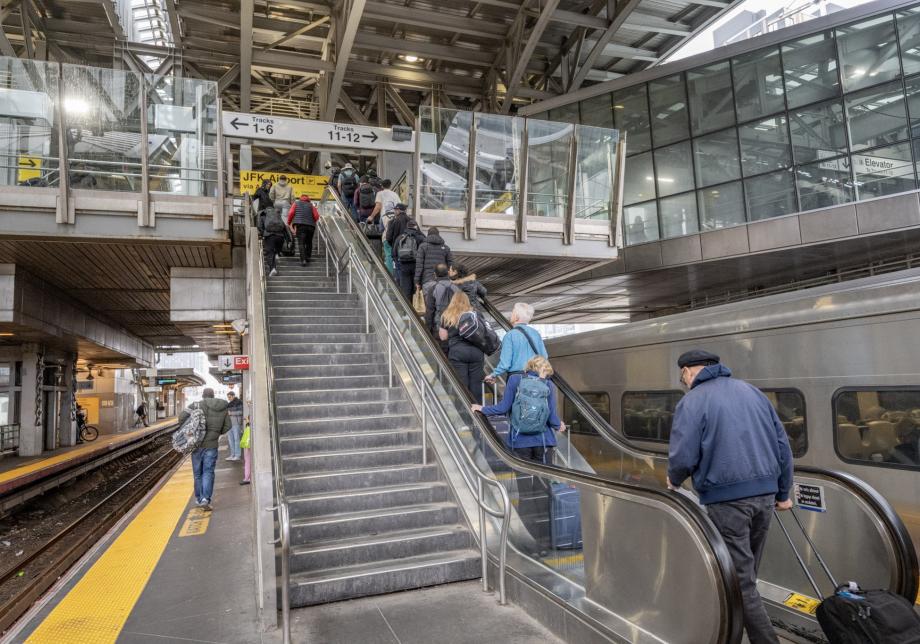
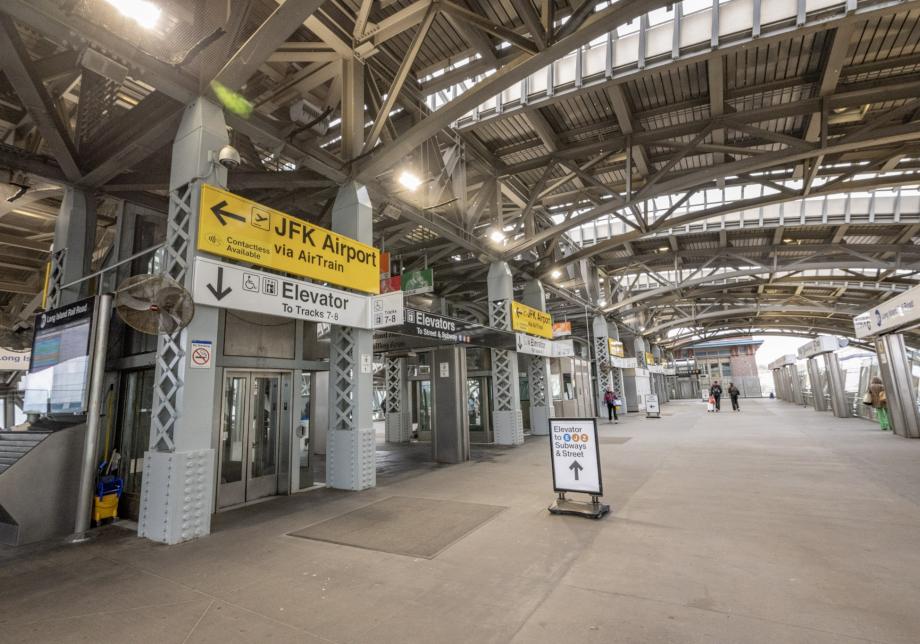
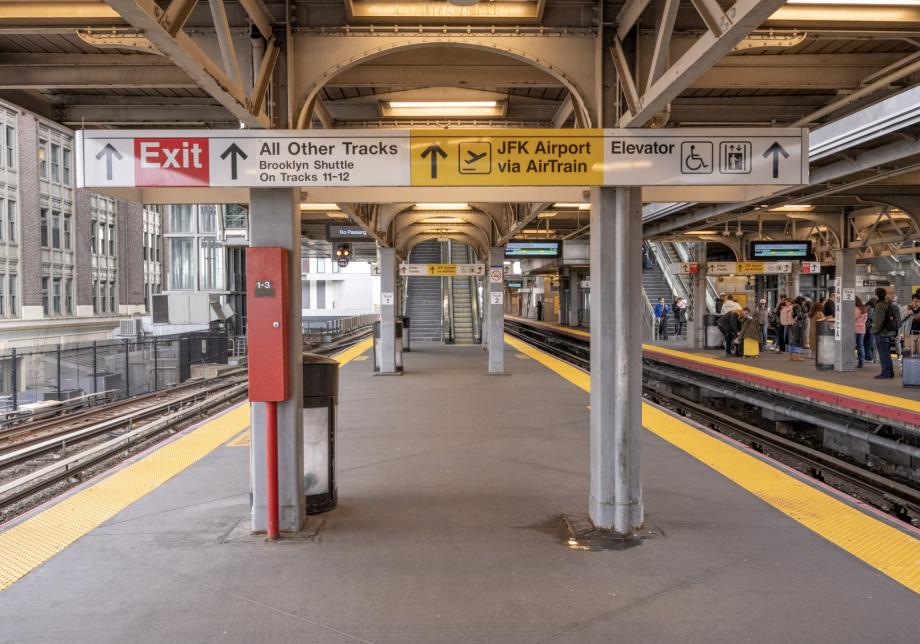
Jamaica Station is a vital regional hub linking LIRR commuter rail, subways, buses, and the AirTrain to JFK Airport. More than 1,000 trains and 200,000 passengers move through it every weekday, making it the fourth‑busiest commuter rail station in North America. Yet the station has not seen significant, rider‑focused investment since the AirTrain JFK opened in 2003. Since then, Jamaica Station has only grown in regional importance, particularly with the opening of Grand Central Madison and introduction of fare discounts like CityTicket supporting LIRR ridership growth.
With $50 million from the State Budget, the MTA is partnering with the Port Authority of New York and New Jersey (PANYNJ) to reimagine the Jamaica Station complex as a modern, accessible, and welcoming gateway to New York. The work complements the multi-billion-dollar investment to redevelop JFK Airport. Funding will support the project’s design phase, and upgrades to the complex will improve passenger circulation, accessibility, wayfinding, comfort, and the station experience.
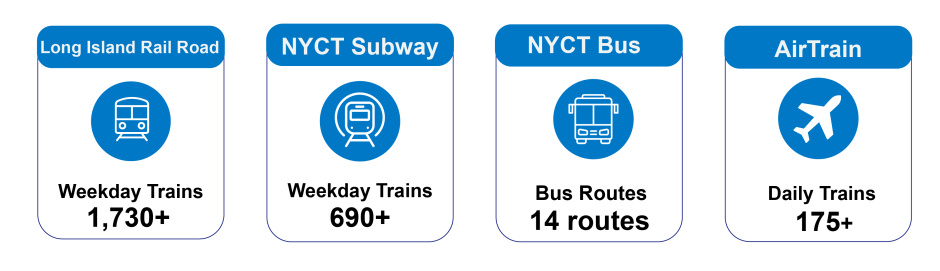
With $50 million from the State Budget, the MTA is partnering with the Port Authority of New York and New Jersey (PANYNJ) to reimagine the Jamaica Station complex as a modern, accessible, and welcoming gateway to New York. The work complements the multi-billion-dollar investment to redevelop JFK Airport. Funding will support the project’s design phase, and upgrades to the complex will improve passenger circulation, accessibility, wayfinding, comfort, and the station experience.
Start preliminary engineering and enable more efficient environmental review to extend the Q west along 125th Street
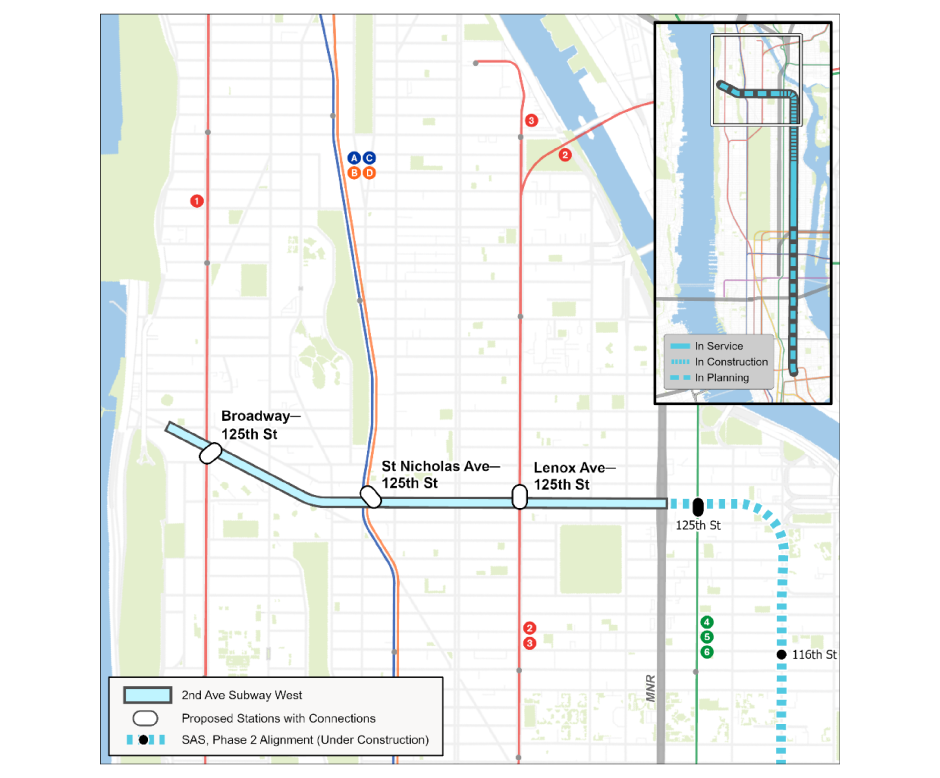
The State Budget includes $25 million to advance preliminary engineering and design work to extend the Q west along 125th Street following Second Avenue Subway Phase II. This builds on the funding provided in the FY2025 State Budget for the 125th Street Subway Feasibility Study, allowing the project to move into its next phase with new funding. The upcoming work will focus on developing station concepts, designing the tunnel alignment, and sequencing construction activities to support future implementation.
Lawmakers have also authorized the MTA to conduct the State Environmental Quality Review Act (SEQRA) process in two stages: one focused specifically on the tunnel and another for the rest of the project. Without this change, we would have to complete a single SEQRA review that could extend beyond the end of Second Avenue Subway Phase 2 construction, requiring crews to decommission and remove the TBMs. Segmenting the environmental review allows us to keep the TBMs underground and operating even after Phase 2 crews finish work, saving $175 million over the life of the project. While SEQRA already provides broad authority for this approach, including this specific project in the budget proposal offers additional clarity and helps reduce the risk of procedural challenges.
Auto insurance reforms reduce risk
The FY27 State Budget includes three important auto insurance reforms that stabilize costs and free up operating dollars to fund service instead of litigation:
- A clearer standard for “serious injury.” New York’s no fault rules previously allowed people to sue for pain and suffering based on broad or subjective criteria. The state has now tightened this definition, so lawsuits are limited to truly serious injuries, reducing minor claims that often turn into costly litigation.
- A $100,000 cap on non-economic damages in certain cases. When the at fault driver is uninsured, impaired, or committing a felony, non-economic damages, such as pain and suffering, are now capped. This keeps payouts focused on genuine injuries without rewarding dangerous or unlawful behavior.
- A modern comparative negligence rule. Under prior law, someone could sue even if they were almost entirely responsible for a crash. Now, if a claimant is more at fault than the defendant, they cannot recover non-economic damages.
These reforms matter because MTA buses and service vehicles are often pulled into multi‑vehicle lawsuits. By tightening the injury standard, capping certain payouts, and tying damages more closely to actual fault, the new law cuts down on both the number and cost of claims. That means lower risk, fewer large settlements, and more predictable costs, freeing up operating dollars that can go directly into better service for riders.
Lawmakers committed additional resources to strengthen safety and security in the subway system
Funding from the FY2027 State Budget will support two major investments to further improve safety and security in the subway system.
Expand the Subway Co-Response Outreach Teams program
The State Budget includes $25 million to expand the Subway Co-Response Outreach Teams (SCOUT) teams from 10 to 15. This funding will ensure more teams in the field can reach more locations and help more people in need.
SCOUT pairs a nurse with MTA Police to engage people in the subway system with severe mental illness and connect them to the City of New York’s healthcare and shelter system. Interagency coordination between MTA Police, NYC Department of Homeless Services, and NYC Health + Hospitals turns has churned measurable results.

Deploy more NYPD officers in the subway system
The FY27 State Budget sustains current funding levels that support NYPD deployments on the subway, including at night and in targeted areas of greatest need. This continues a collaboration between the State, City, and NYPD that started in 2025 and has proven successful.
The budget extends tax increment financing for another year to fund infrastructure projects
We’re always looking for cost-effective ways to deliver projects faster, and tax increment financing (TIF) is one option in our toolkit. TIF enables governments to pay for infrastructure projects using future increases in property tax revenue that the project is expected to generate. A TIF was used to partially fund the extension of the 7 Line to Hudson Yards.
The FY27 State Budget includes a one-year extension of existing TIF rules that could create mass transportation capital project districts with the City of New York’s approval. In those districts, a portion of the incremental tax revenue generated by new development can be directed toward major transit investments.
As a value capture mechanism, TIF can help lower upfront capital costs, ease pressure on the MTA’s operating budget, and reduce reliance on new taxes.
Tier 6 pensions reforms will impact MTA employees and budget
The FY2027 State Budget makes changes to Tier 6 of the New York State retirement system. Employee contribution rates are now lowered to a range of 3% to 5.75% for State employees across New York, with no one earning $75,000 or less paying more than 3%. The budget also raises the cap on overtime that can be counted toward final average salary from about $22,000 to $30,000, with annual inflation adjustments.
While these changes will mean higher take home pay and improved pension benefits for some MTA employees, the full scope of who will be affected is not yet known. The reforms may also have future implications for the MTA’s operating budget.
The FY2027 State Budget gives the MTA the resources to keep delivering better, safer, and more reliable service
These investments are more than numbers on a page; they translate into shorter trips, safer stations, modern infrastructure, and a transit system that can grow with the city it serves.
The MTA Policy Brief highlights key policy developments shaping New York’s transportation system. Designed for decision-makers, journalists, advocates, and riders, we explain the most pressing transportation challenges of today and tomorrow, from budget complexities to legislative actions to infrastructure investments. Read more of the Policy Brief.