In 2025, the MTA Board approved two budgets: the 2026 operating budget and the five-year capital financial plan. In our first edition of the Policy Brief, we explain the difference between them—and why understanding the New York transportation system means understanding how we invest in it.
Behind every transit ride, construction site, and maintenance order is a budget decision. The MTA’s two major financial plans, the operating budget and capital budget, organize these decisions. The operating budget defines how the region’s transit system runs today, and the capital budget shapes how it will grow tomorrow. Knowing the difference is key to understanding how the MTA pays for, operates, maintains, and improves transportation.
Here, we explain these two budgets—how they’re funded, what they fund, and who approves them.
The operating budget funds day-to-day service
Every day, the MTA moves 6.5 million people across New York on subways, commuter trains, buses, and paratransit vehicles, plus an additional 930,000 vehicle crossings on seven bridges and two tunnels. The operating budget pays for this daily operation; its funding helps pay our employees, run trains and buses, and perform daily tasks like cleaning and maintenance.
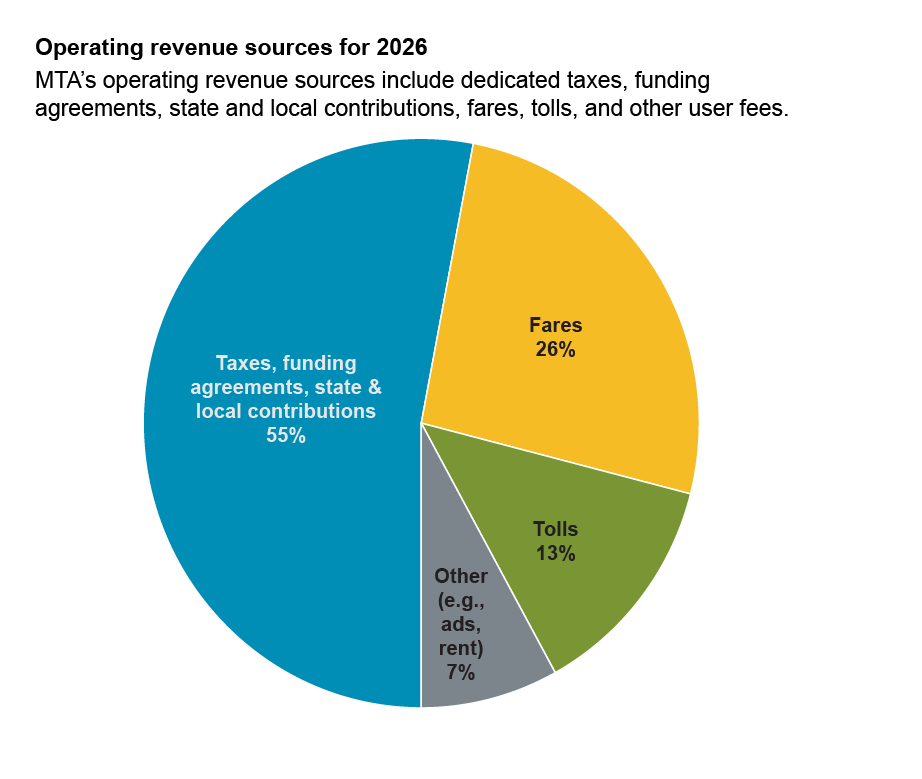
Operating revenue comes from fares, tolls, and dedicated funding
We collect fares and tolls each time a rider taps into the subway or onto a bus, buys a railroad ticket, or pays a bridge or tunnel toll. But fares and tolls only account for 40% of our operating budget, which isn't enough to support the entire operation. Everything else comes from other sources, like state taxes and funding agreements. The big ones are:
- Payroll Mobility Tax, which is a corporate payroll tax on the largest employers in the MTA service region
- A portion of sales taxes collected on items sold in the MTA region such as appliances and restaurant bills
- Petroleum business taxes collected from motor fuel businesses
- A portion of real estate taxes, which fluctuate with the real estate market
- Subsidies from the City of New York to support some transit operations like Access-A-Ride and express buses
Revenue from advertising, concessions, and rent from retail spaces in stations help make the operating budget whole.
Labor makes up most of the MTA’s expenses
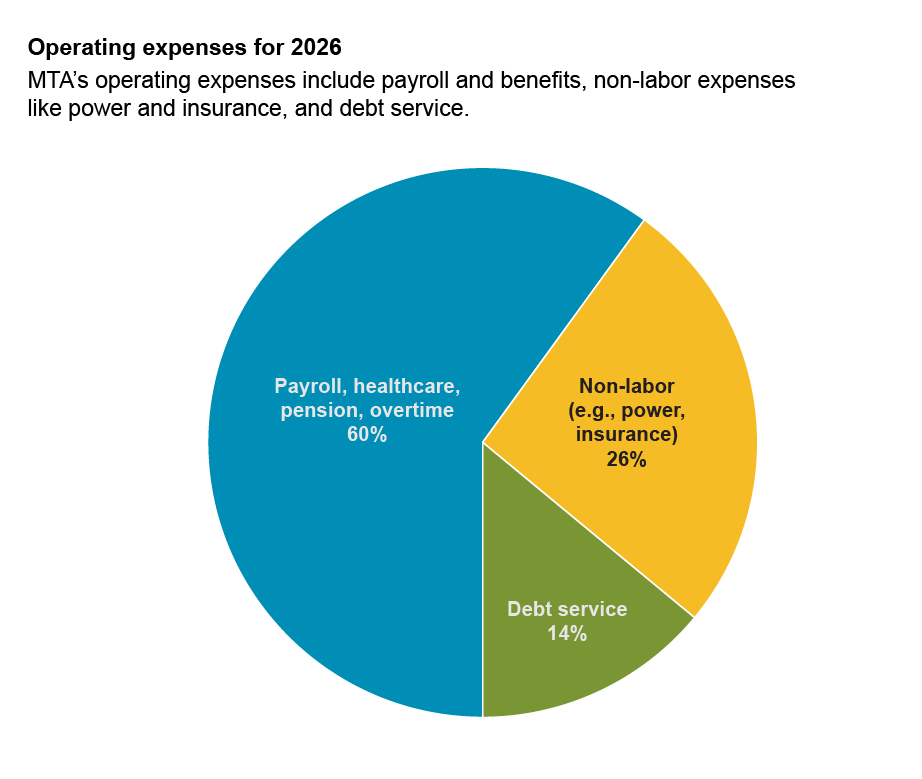
Mass transit is a people-powered operation. The MTA employs more than 70,000 dedicated workers, most of whom handle the essential, day-to-day tasks that keep the system moving, like driving trains, assisting customers, and cleaning stations. That people-heavy operation makes up about 60% of spending, covering salaries, pensions, and benefits like healthcare.
The remaining costs cover utilities and power to keep the lights on and fuel tanks full, and debt service to cover payments on past borrowing.
The MTA Board adopts an updated operating budget every year
Every November, the MTA proposes the operating budget for the next year, and the MTA Board votes to adopt the budget in December. Every July, the MTA presents to the Board an updated financial plan, outlining any changes in revenue projections or expenses.
The capital budget invests in the future of the transportation network
While the operating budget is about keeping the system running today, the capital budget is about making the system better for tomorrow. The MTA develops a capital budget every five years, putting forth major investments in repairs, modernization, and expansion that ensure our infrastructure can continue serving the region for decades to come.
A mix of revenue sources fund the capital program
Grants, bonds, direct contributions from New York State and City, and dedicated taxes and tolls make up most of the capital program:
- The capital lockbox is made up of taxes on corporate payrolls, certain sales transactions, and real estate transfers. Capital lockbox taxes are dedicated to the capital budget only.
- Congestion relief zone tolls, also a part of the capital lockbox, are collected from vehicles entering Manhattan below 60 St.
- Federal funding and grants are used for critical repair work, resilience investments, and system expansion projects.
- Bonds allow the MTA to finance large projects over time.
- Direct contributions are made by New York State and New York City.
The Bridges and Tunnels portion of the capital budget is completely self-funded through bonds, which are repaid with toll revenue. And additional MTA self-funding occurs through capital program cost savings, freeing up resources to support debt financing.
Capital dollars fund the vital improvement projects that make the transportation network more reliable
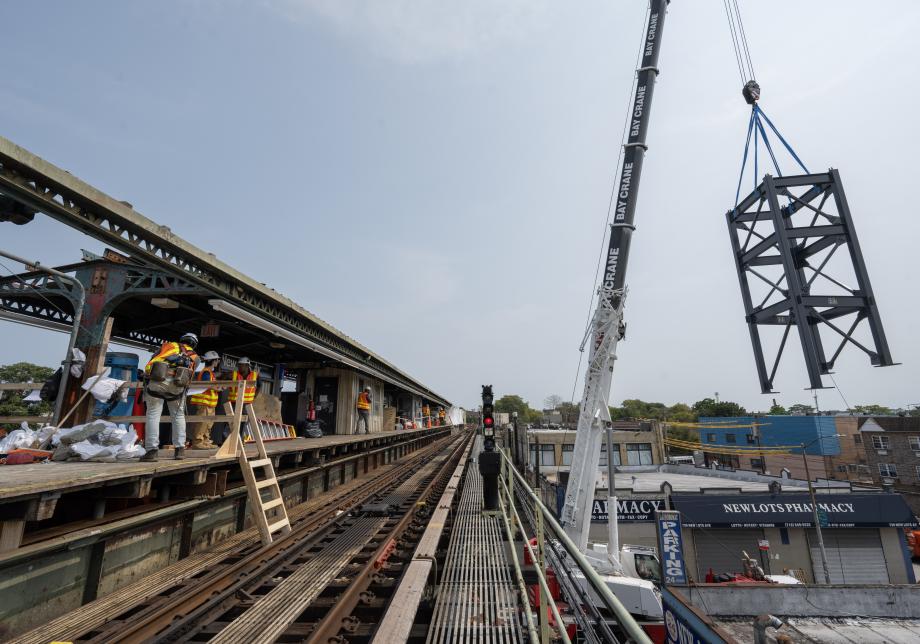
The MTA funds capital projects across the transportation network that will provide more frequent and reliable service, improve the customer experience, and make the system more resilient. Major investment categories include:
- New subway, bus, and railcar rolling stock, like the new open gangway subway cars on the line.
- Station upgrades such as the reconstruction and modernization of Broadway Junction.
- Accessibility improvements like adding and replacing elevators in stations.
- Structures and track work like replacing the Grand Central Train Shed.
- Signal and power upgrades which speed up trains and make trips more reliable, like the ongoing signal modernization on the ,,,, and lines.
- Climate resiliency work to protect critical infrastructure against stormwater and coastal flooding
- Expansion projects like Second Avenue Subway, the Interborough Express, or the new Grand Central Madison commuter rail terminal.
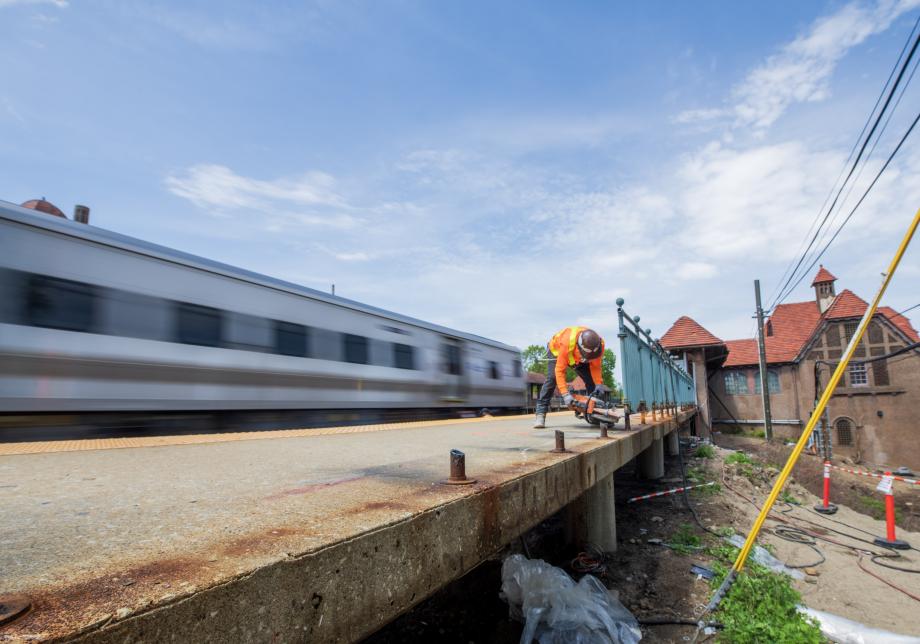

The MTA unveils a new capital budget every five years
Unlike the operating budget, the MTA proposes a capital budget with a new set of projects once every five years. The proposed plan must be reviewed and approved by the MTA Board, and once approved, it is sent to the Capital Program Review Board, consisting of representatives appointed by the Governor, Mayor, and legislative leaders, for final approval. Formal amendments to the plan can be made during the five-year period to incorporate any emerging investment and project needs. In June 2025, the Capital Program Review Board approved our $68.4 billion 2025–2029 Capital Plan, the biggest investment in state of good repair in MTA history.
The operating and capital budgets work in tandem: one keeps the MTA running today, and the other shapes the system for tomorrow. By understanding how each budget is funded, what they support, and how they’re adopted, lawmakers and riders can better understand the decisions that affect their daily commutes — and the long-term investments shaping the future of transit in the region.
The MTA Policy Brief highlights key policy developments shaping New York’s transportation system. Designed for decision-makers, journalists, advocates, and riders, we explain the most pressing transportation challenges of today and tomorrow, from budget complexities to legislative actions to infrastructure investments. Read more of the Policy Brief.