On this page
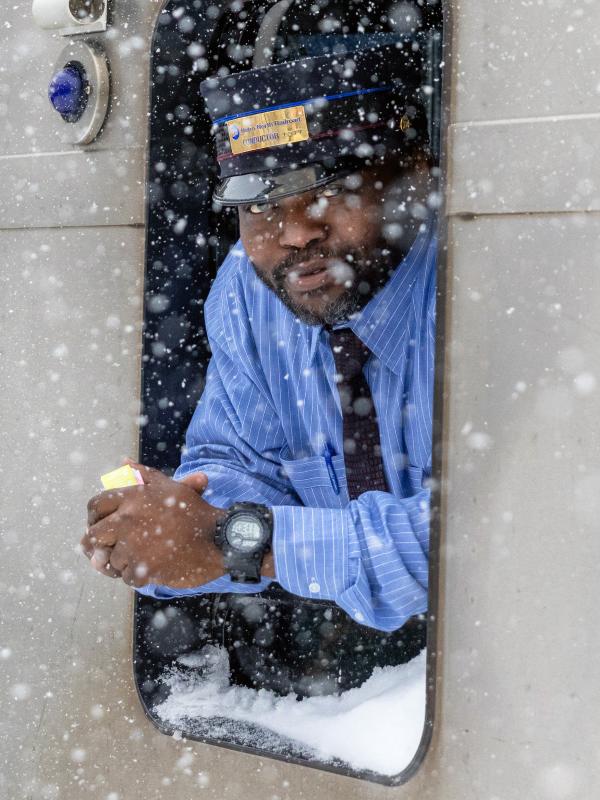
The MTA is committed to providing a transit system that is safe, reliable, and accessible for all. Every day, our dedicated employees work to keep our subways, buses, and trains moving, ensuring millions of riders get where they need to go. As ridership continues to grow, customers are experiencing more dependable journeys across the network.
We’re always investing in the future of the system. Strengthening core infrastructure is essential to building a more reliable transit network that will serve future generations. The 2025–2029 Capital Program is the largest state-of-good-repair investment in MTA history, delivering critical upgrades, new rolling stock, and major expansions across the region. These projects will rebuild, modernize, and grow public transportation, keeping the system running safely and efficiently for decades to come.
Both our operating and capital programs are guided by the core values that define our mission and inform every decision we make:
Accessibility: We are committed to expanding access to mass transit throughout the MTA region and are consistently looking for ways to improve your ride.
Equity: We are working to ensure that we provide frequent, reliable, and affordable transit services that promote connectivity throughout the MTA region.
Sustainability: We are committed to delivering sustainable public transportation by building a more climate resilient transit system and increasing the energy efficiency of our fleet and facilities.
Cost-consciousness: We are proactively taking steps to reduce waste and be more productive in order to provide the best service to our customers.
These four values shape the strategic priorities that guide our work. By focusing on these priorities, we maintain a fast, accessible, and reliable public transportation system, the economic engine for the New York region.
Deliver excellent service
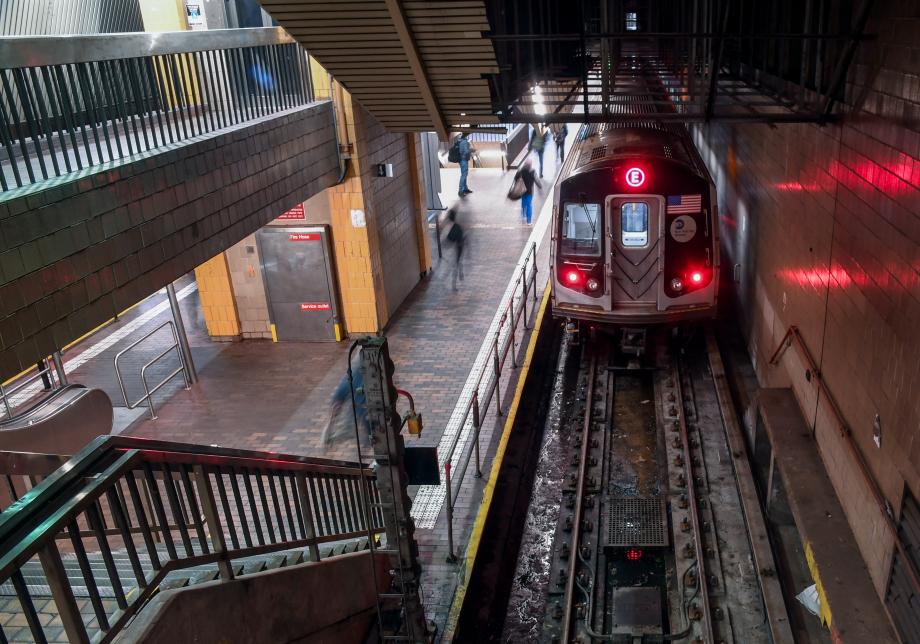
We're continually working to make our subway, bus, paratransit and commuter rail service faster and more reliable.
Since 2023 we have increased service on 12 subway lines without losing a step: our on-time performance in 2025 exceeded 85%, a record. Towards the end of 2025, subway ridership broke post-pandemic records multiple times, hitting 4.65 million customers on one day in December.
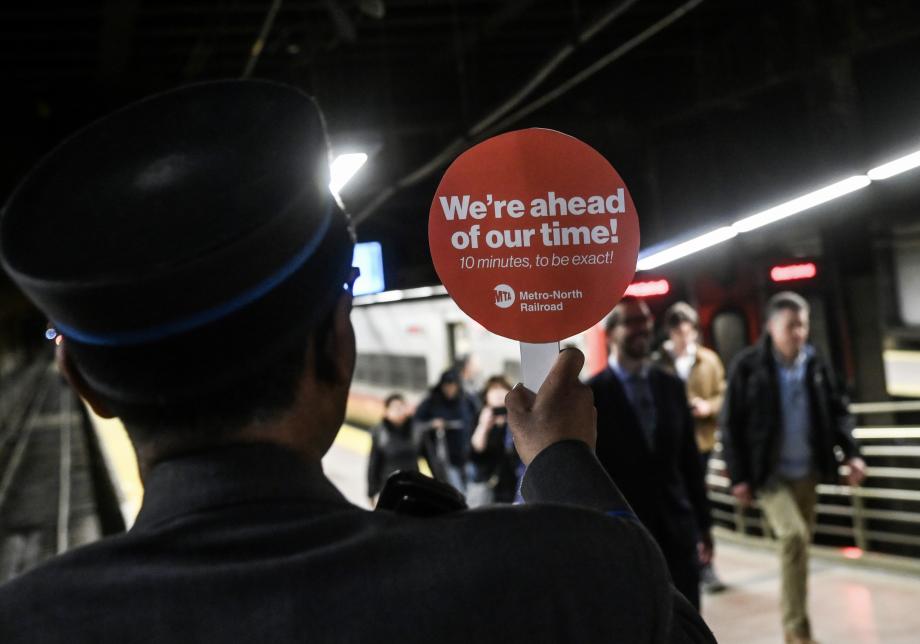
Not to be outdone, Long Island Rail Road (LIRR) and Metro-North ridership has rebounded as high as 98% and 88% of pre-pandemic levels, respectively. Metro-North regularly beats 2019 ridership averages on the weekends and LIRR surpassed 300,000 riders in a single day multiple times in 2025, all while achieving on-time performance of more than 96%.
Access-A-Ride is similarly hitting record high ridership with 1 million monthly trips in 2025 and overall ridership growing to 140% of pre-pandemic levels, reflecting improved service and higher customer satisfaction.
In 2025, we added more weekday service on the and lines. We also made major improvements on the and lines, aiming to reduce crowding and delays. Metro-North cut travel times from Manhattan to Poughkeepsie with super-express trains and LIRR delivered reliable service for games and concerts in the city and beyond. Looking ahead, our focus is to reduce the frequency and impact of disruptions and to continue optimizing schedules to find new ways to speed up travel times for our customers.
Provide 21st-century bus service
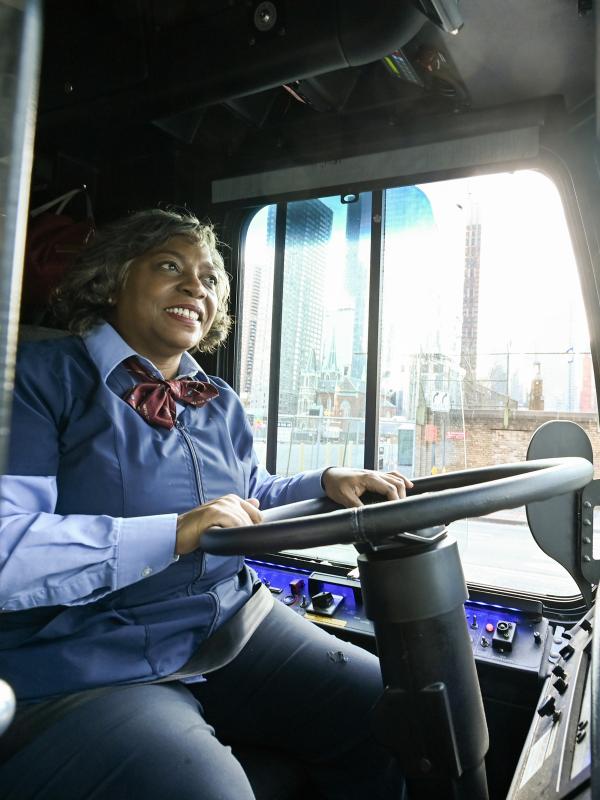
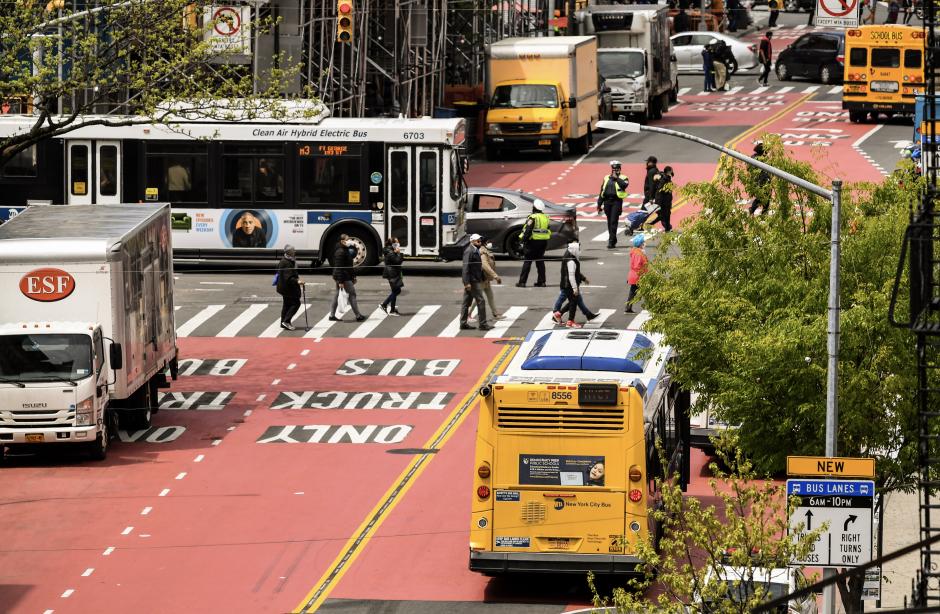
Frequent, reliable, and accessible bus service is essential to millions of New Yorkers, and the MTA has been taking decisive action to create a better bus experience.
The redesigned Queens bus network simplified the network and added 11 new routes, expanded overnight service and improved transit access for more than 68,000 residents, while delivering “10-minutes-or-better” service to 124,000 additional riders.
The MTA’s Automated Camera Enforcement (ACE) program expanded dramatically in 2025, reinforcing its role as a key tool in speeding up buses and keeping streets safer. By year’s end, more than 1,400 buses were ACE-equipped, covering 560 miles of routes across all five boroughs and benefiting over 980,000 daily riders. As a result, bus speeds increased by an average of 5%, with some corridors seeing gains as high as 30%. Collisions dropped by 20%, and blocked bus stops were reduced by 40%.
Promote safety and respect
The safety of our customers and employees is a top priority, and we’re committed to maintaining a secure network for riders. 2025 was one of the MTA's safest years on record, thanks to close collaboration with Governor Hochul and the New York City Police Department.
At subway stations, our in-house teams have installed platform barriers at 115 stations as of January 2026, providing customers with additional safe places to wait for the train. The MTA will continue installing barriers in more stations in 2026.
Since 2024, two uniformed NYPD officers have been riding overnight subway trains from 9 p.m. to 5 a.m., a move that has driven a drop in major transit crimes. Building on that success, in 2025 Governor Hochul and New York City deployed 750 additional NYPD officers across the system, including 300 inside train cars, and prioritized patrols at the 30 key stations that account for half of all transit crime.
We are also leading the fight against ghost plates. Toll evasion isn’t just lost revenue; it’s a serious crime that undermines safety and fairness across the MTA system. Since March 2024, the MTA has joined forces with city and state law enforcement to crack down on fraudulent and ghost license plates. The results speak for themselves: during 2025, the task force carried out 54 joint operations, leading to over 800 arrests and over 34,000 summonses. Together, drivers owed more than $18 million in unpaid tolls and fees from using fake or obscured plates to dodge detection.
Improve the customer experience
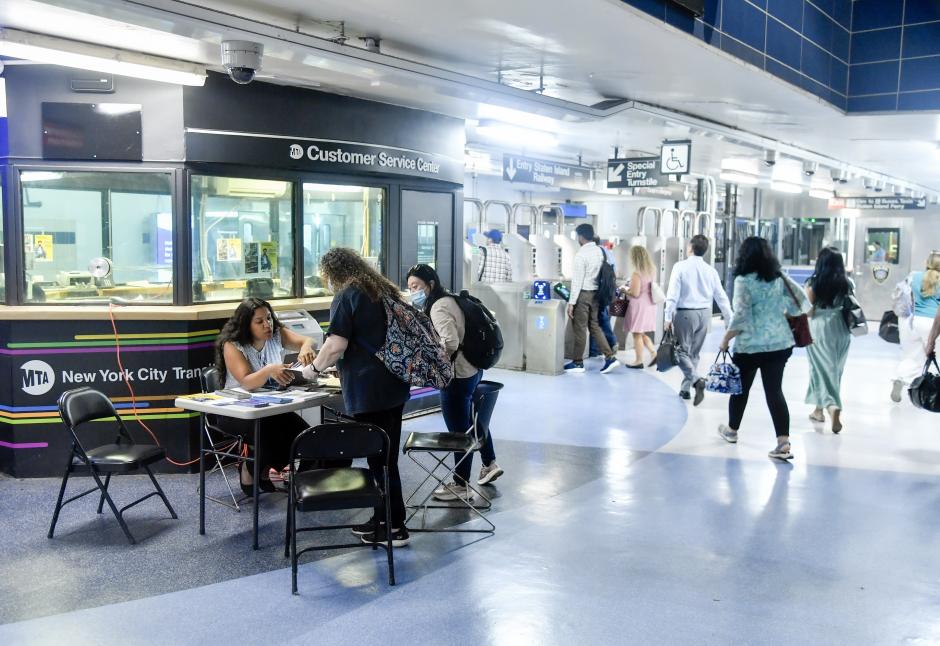
We’re always looking for ways to make public transit more appealing to all New Yorkers. After a long farewell campaign, we officially retired the MetroCard and are in the Tap and Ride era! OMNY provides a convenient, 21st century fare experience that allows customers ease of access and financial flexibility. We also opened new Customer Service Centers (CSCs), with a total of 30 across the city. Agents at CSCs are a key resource for riders with questions or concerns. We continue to promote the Fair Fares NYC program, which provides half-price fares for low-income New Yorkers.
We’re also improving ADA accessibility throughout the system at a faster pace than ever. We replaced 41 elevators and 24 escalators in 2025, a new record. Our teams have made over 40 stations accessible since 2020, for a total of 156. But we’re not done. We’re increasing our pace of investment: by the end of the 2025-2029 Capital Plan, no rider will be more than one station away from an accessible station.
Maintain financial stability
We’ve worked hard to ensure that we’re not just able to serve New York today, but long into the future. Funding from our partners in the State and Federal government was crucial in the wake of the COVID-19 pandemic, and remains vital to our daily operations and long-term planning. We also found a new way to raise critical revenue: Congestion Pricing. In addition to reducing injuries, emissions, traffic—and of course speeding up commutes for cars and buses—congestion pricing raised over $500m in its first year alone, providing resources for capital projects for years to come.
We’re also acting internally to work smarter for a more efficient MTA. We’re already spending less today than we did in 2019 in real dollars, and we continue to search for ways to lower costs on behalf of our riders and taxpayers. In 2025 alone the MTA achieved $500 million in annually recurring cost savings.
Strengthen and expand the network
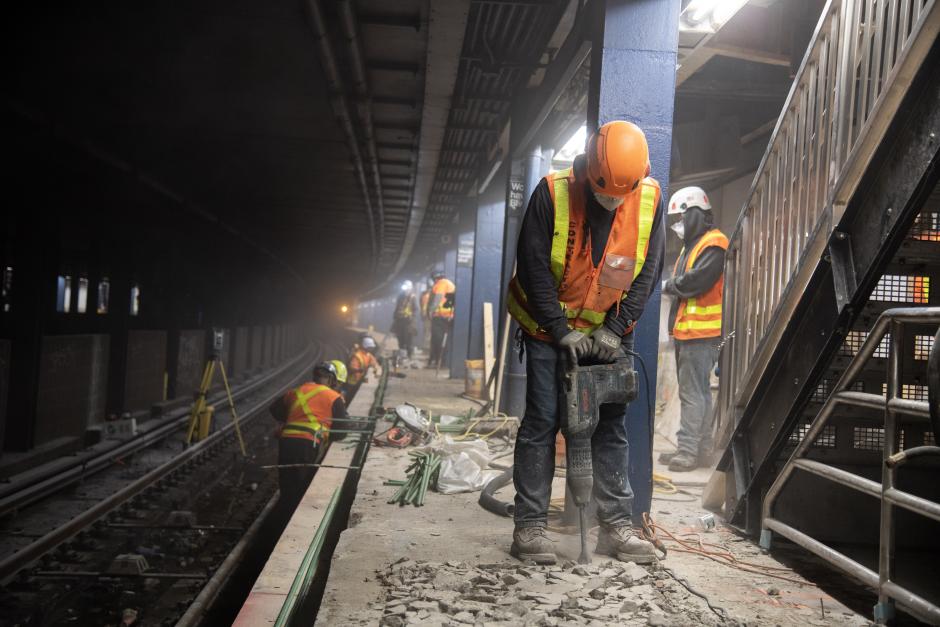
Investing in core infrastructure is essential to how the MTA builds a stronger, more reliable transit system. The 2025-2029 Capital Program is the largest state of good repair investment in MTA history and will deliver necessary repairs, new rolling stock, and critical expansions across the network.
Plan highlights include purchasing 2,000 new railcars, making more than 60 stations accessible, modernizing 75 miles of signals, and installing modern fare gates at 150 locations. Work has already begun on projects in this Capital Plan, including upgrading signals on the and resiliency efforts on Metro-North’s Hudson Line.
We’re also focused on the future of our network. We’ve made significant progress on Second Avenue Subway Phase 2, with major construction beginning in 2026. And we began design work on the Interborough Express, which will significantly reduce travel times between Brooklyn and Queens and connect underserved communities to the subway, bus, and LIRR. Curious to see the progress of these Capital projects? Check out our new and improved Capital Program Dashboard.
As we expand our footprint, we’re focused on sustainability: when completed, these projects will allow residents in car-dependent areas new access to green transportation, reducing climate emissions. Plus, our updated Climate Resilience Roadmap outlines how we plan to work with New York City to ensure our existing infrastructure stands the test of time.
Elevate the employee experience
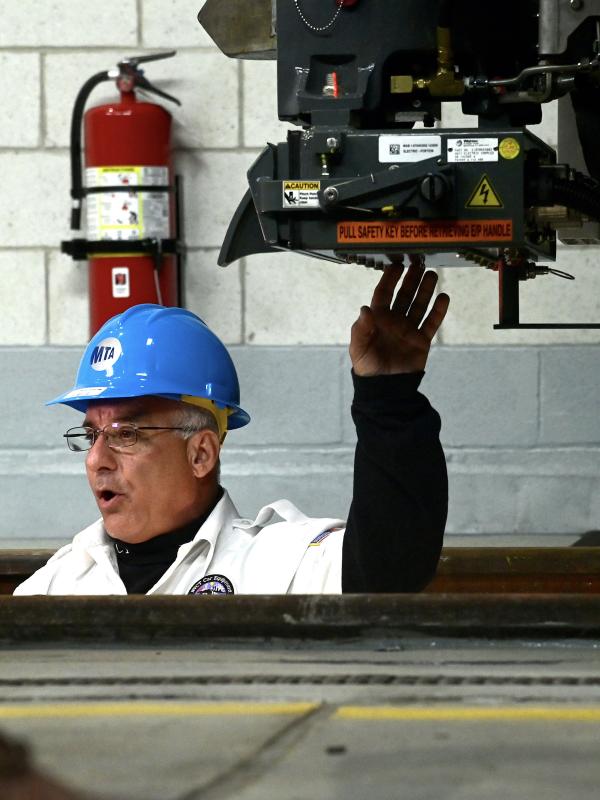
We can’t achieve these goals without our incredible workforce. We’re investing in our existing talent by providing new manager training and resources, plus an increased focus on professional development. We accept hundreds of interns every year, giving students and recent graduates on-the-job experience and helping us establish our future workforce.
Want to be part of the team that moves millions? Check out our open positions here.