At the MTA’s Board meeting in February, we shared the results from Fall 2025 Customers Count, our largest biannual survey of rider satisfaction across the transit system. This Policy Brief explains how our market and customer research efforts have evolved and continue to shape the MTA’s operations and programs.
Customer research tells us who our riders are and what they care about—which directly shapes how we improve the system
For decades, the MTA has used surveys and interviews to better understand our riders. This research offers critical insights that build on operational data, like ridership counts or fare transactions. This type of research allows us to:
- Measure riders’ perceptions and understand their experience over time to make sense of how customers feel about service, safety, cleanliness, and communication.
- Compare customers’ self-reported experiences against other quantitative data to better understand how perception corresponds to actual system performance.
- Evaluate experiences across different service regions, lines, branches, routes, or stations to guide geographically targeted improvements.
- Assess and refine new products or initiatives with focus groups, message testing, or usability testing for new digital products.
The feedback we get leads to real changes for our riders. Here are some recent examples of how we incorporated findings from our work with customers into new or improved service and products:
- Adding and replacing lighting at select subway stations to enhance safety
- Increasing targeted deployment of co-response teams in partnership with the City at subway stations to help vulnerable New Yorkers
- Modifying station cleaner staff schedules and implementing new initatives in stations and onboard commuter trains to improve cleanliness
- Continually improving mobile apps, including the MTA app and TrainTime
- Adding new tap and ride features on subways and buses so customers can better manage their trips, with access to trip and charge history and fare cap progress to unlimited rides
We’ve built capacity to more effectively capture and respond to customer feedback more regularly than ever
For many years, the MTA largely relied on outside firms to conduct customer research. Over the last five years, we have developed internal capacity and built a centralized Market and Customer Research team. It has accelerated our ability to conduct in-house work, with a dedicated team of customer research experts with know-how to design and administer robust surveys and analyses. This is not only financially efficient, but it also allows us to more consistently and quickly gather customer feedback on a range of issues and initiatives, and when appropriate, compare and learn across agencies. Our research products include:
- Customers Count for customer satisfaction with each mass transit mode, and a range of performance criteria. It is our flagship biannual survey. We use a consistent methodology each cycle to reliably compare results and track changes in customer sentiment over time.
- Monthly Pulse surveys for subway, bus and paratransit riders. Pulse surveys ask about a rider’s last trip, allowing us to understand how experiences vary across time of day and day of week.
- Targeted surveys for feedback on specific customer-facing programs, such as platform safety improvements or bus network redesign.
- Focus groups and one-on-one interviews on a variety of programs to get more in-depth feedback from a smaller group of customers. This enables us to refine products and other offerings, like the new MTA app.
Our research is rooted in an academically rigorous approach to outreach, survey design, and data analysis
The MTA team is responsible for all elements of a study, from start to finish. That includes developing a methodology; writing questions and programming surveys; cleaning, weighting, and analyzing the data; and summarizing findings with actionable recommendations. While each study has its own unique objectives, several guiding principles are part of the team’s general approach:
1. Aggressive sampling approaches
Even though we carry more than 6 million riders daily, gathering actionable customer feedback at that scale is a challenge. Our largest survey, Customers Count, receives close to 80,000 responses each cycle. That’s up 16-fold over studies prior to 2022, where we received around 2,000 to 5,000 responses to similar customer surveys. The larger sample populations enable the team to examine statistically-significant trends at more specific geographies, like at stations or on individual bus routes. We’re reaching more customers to get more input than ever before. Here's how:
- Replacing traditional methods with more efficient digital tools. Historically, the MTA used outside companies to reach customers with paper surveys and cold calls. Though effective at the time, that approach was slower, more costly, and resource intensive. Today’s in-house surveys use digital tools that speed up survey administration, data collection, and processing, while reducing overall costs and staff time. That increased efficiency and flexibility also enables the team to administer more surveys in a timely manner over the course of the year.
- Expanding communication channels to reach more riders. We use multiple communications channels to encourage riders to participate in research, including a dedicated advertising campaign for surveys, opted-in email lists, QR codes on digital screens in subway and train stations and on buses, in-app notifications, and the MTA’s own website and social media accounts. Specifically for Customers Count, we conduct the survey in nine languages to broaden access.
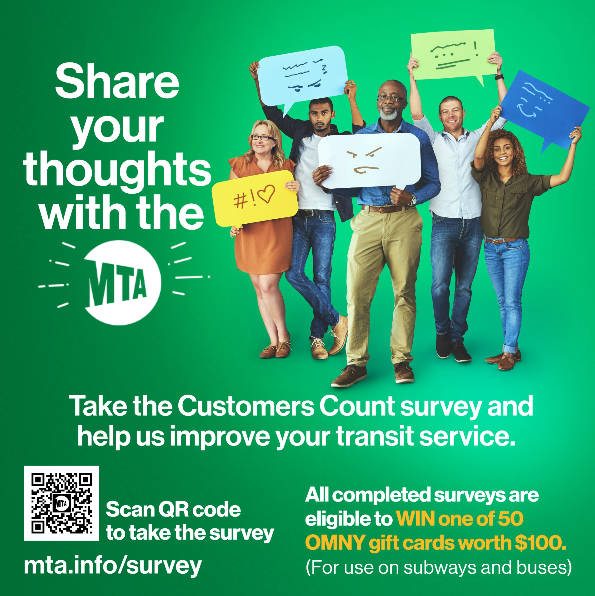
Customers Count is advertised across the transit network.
2. Robust survey design, with a range of formats
When designing a survey or an interview discussion guide, we take considerable effort to ensure we receive direct and specific responses. Some examples include:
- Designing unbiased, high‑quality questions using neutral wording, avoiding leading questions, rotating answer choice order, and providing options like “Prefer not to answer” or “Not applicable” so respondents aren’t compelled to give a response that doesn’t fit.
- Collecting focused, reliable data in a short survey while still gathering essential details. For example, in the Pulse Survey, customers report on their most recent trip, allowing us to track known events, like service disruptions or weather incidents, and compare those events to system data.
- Understanding differences across customer groups by segmenting respondents by geography, line, route, demographics and travel behavior (such as transfer patterns) to identify location-specific issues and support targeted improvements.
- Maintaining a consistent methodology over time keeps the survey design the same across studies and lets us compare results over time. For example, the Customers Count survey design changed in 2022, making it not technically comparable to pre-2022 customer satisfaction surveys. Today, we thoughtfully implement survey modifications with each new iteration.
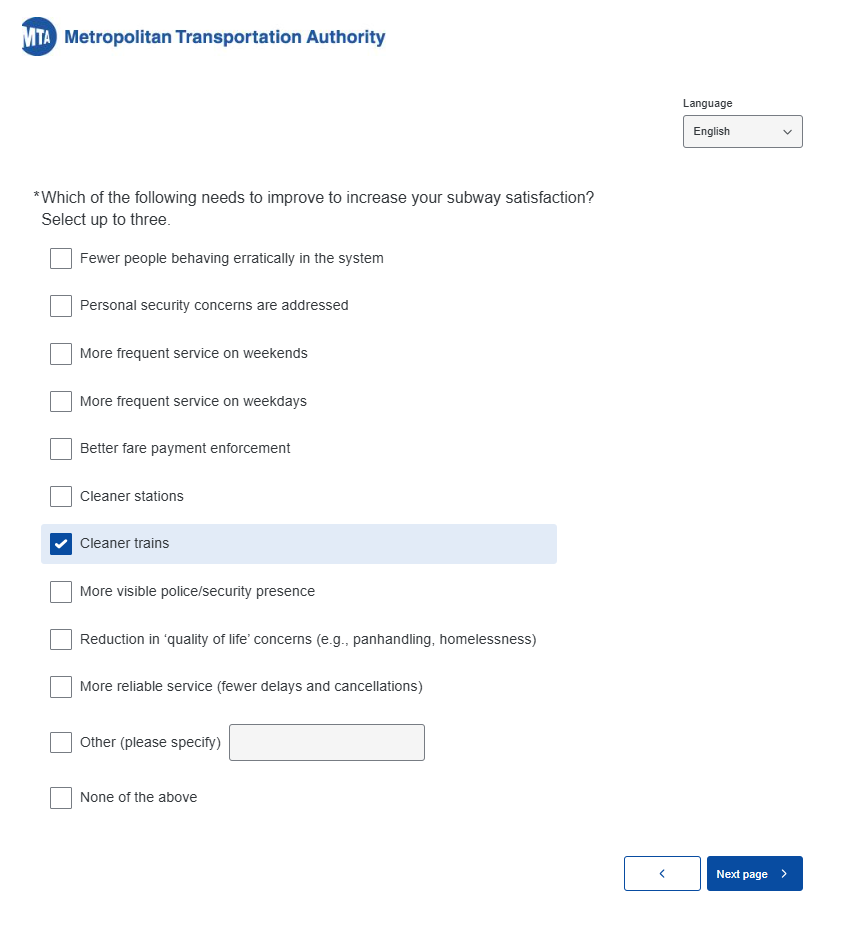
Example question in our monthly Pulse survey for subway riders.
3. Rigorous methodological approach to processing information
Standardized processes for cleaning and analyzing data guarantees our insights are accurate and representative of the riders we serve. We do this by:
- Processing and weighting the data post-collection. After we collect survey data, we apply weighting for each transit mode. This aligns the sample population with the mode’s full ridership and how it breaks down across demographics and geographies, so the results best reflect the true rider population of each mode.
- Quality controlling and assuring our work. We always have multiple team members review each report, checking and re-checking it against internal data tables and previous reports.
- Bringing in outside expertise only when needed. For studies requiring complex data processing that needs specialized tools or extensive interviews, such as our Origin & Destination studies, we partner with outside firms to ensure precision and statistical rigor when in-house resources are constrained.
Feedback from customer research informs real policy and operational changes
Case study: the transfer experience at Jamaica Station
LIRR’s Grand Central Madison terminal opened in 2023 and marked the biggest change to the railroad’s operations in decades. It was a major shift for customers as well, with many more riders transferring at Jamaica Station.
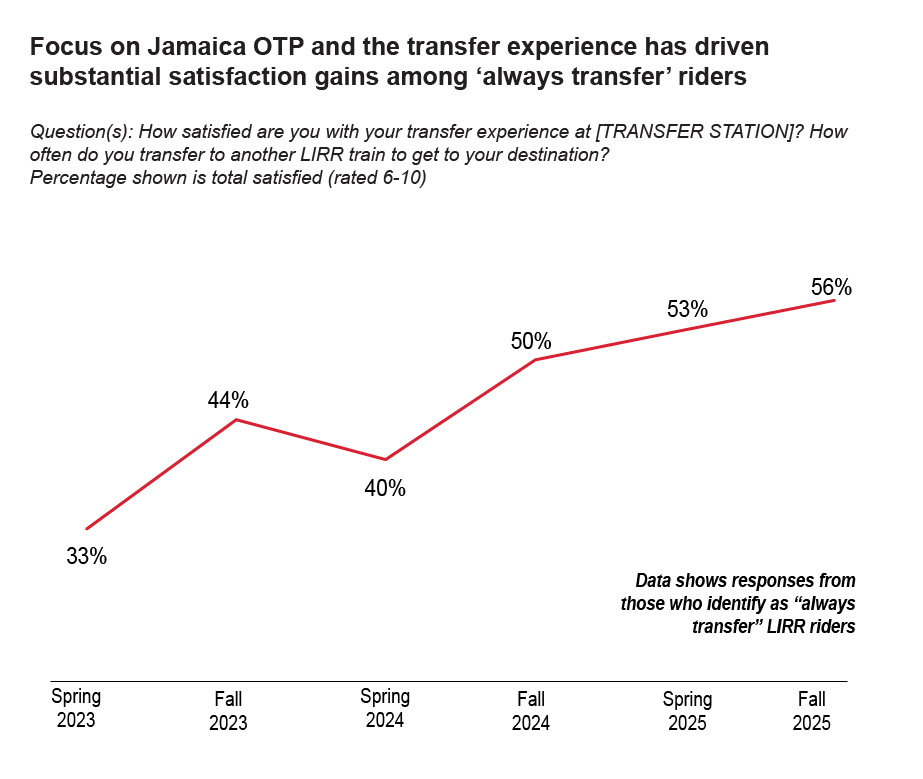
Following the start of this new service, MTA conducted customer research and found issues with transfers at Jamaica. In Spring 2023, satisfaction among riders who always transferred at Jamaica Station was just 33%, with customers reporting missing planned connections due to late trains and last-minute changes in platform assignments.
In response, LIRR formed an inter-departmental working group to understand and resolve the main causes for delayed arrivals and missed connections. Their work resulted in the creation of a new metric—Jamaica on-time performance (OTP)—which expanded LIRR’s measurement of service performance beyond just the terminals. The findings also shaped important operational changes that LIRR implemented, such as:
- Adjusting schedules to give riders more consistent spacing between trains.
- Updating routes east of Jamaica to reduce congestion.
- Balancing how trains move through Jamaica, including how long they pause at the station, to make transfers smoother.
- Assigning platforms earlier, and prioritizing transfers between platforms that are close together for branches that regularly have heavy connection demand.
We also implemented several customer-focused improvements at Jamaica Station thanks to riders’ suggestions.
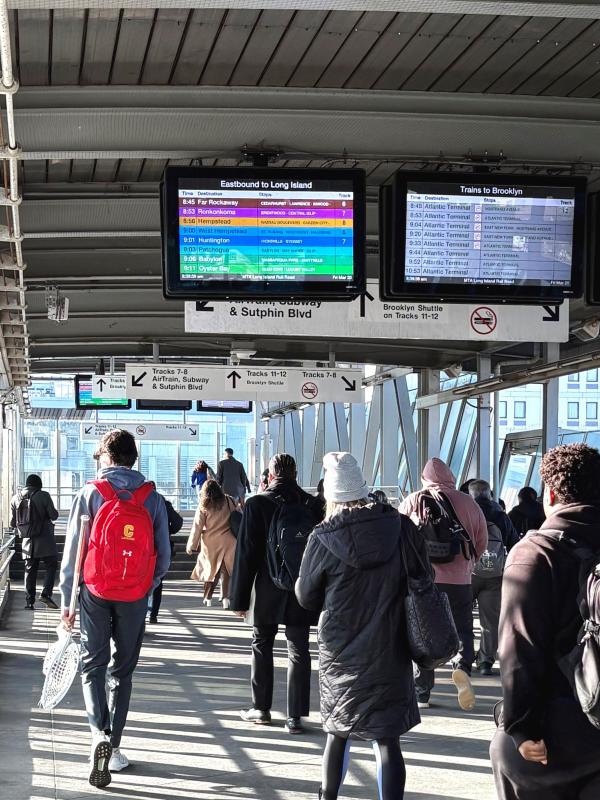
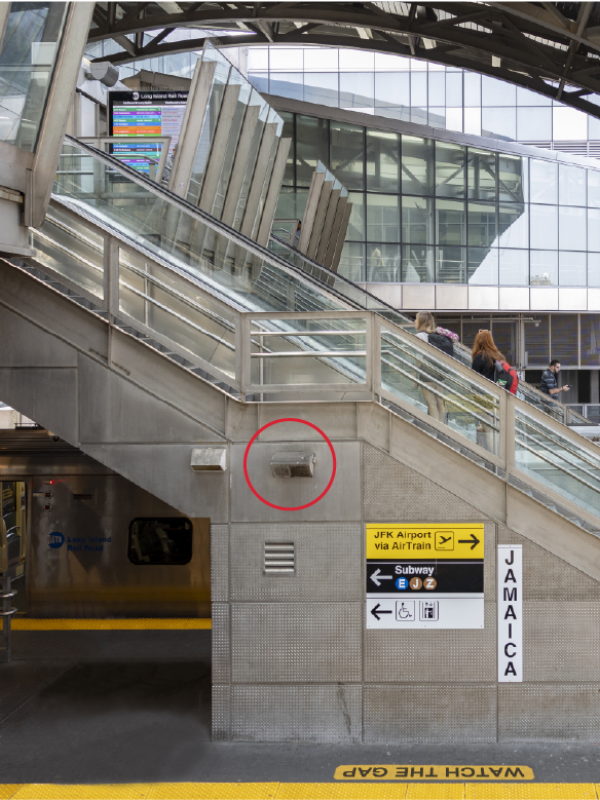
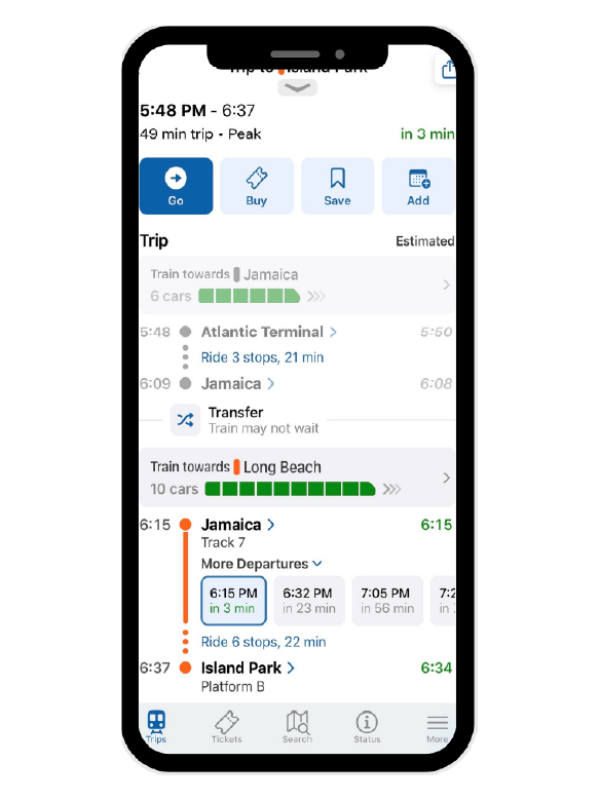
The MTA continues to track Jamaica OTP in real-time to identify trends and recurring delays, enabling teams to prevent and resolve issues as they occur. Monthly Jamaica OTP metrics are now available on metrics.mta.info.
With these interventions, we saw a 23 percentage point gain in overall rider satisfaction among LIRR customers who "always transfer," primarily at Jamaica—from 33% in Spring 2023 to 56% in Fall 2025.
We gather a tremendous amount of feedback, but we always benefit from more
Ultimately, we want to hear from as many riders as we can. The MTA serves a vast and diverse region, and every response strengthens our decision-making. We encourage all customers to participate whenever they can. Your feedback directly shapes the way we do business. If you haven’t enrolled already, please register here to be included in our next batch of customer research.
The MTA Policy Brief highlights key policy developments shaping New York’s transportation system. Designed for decision-makers, journalists, advocates, and riders, we explain the most pressing transportation challenges of today and tomorrow, from budget complexities to legislative actions to infrastructure investments. Read more of the Policy Brief.